AgreementBeginner
Basic subject–verb agreement
التوافق بين الفاعل والفعل
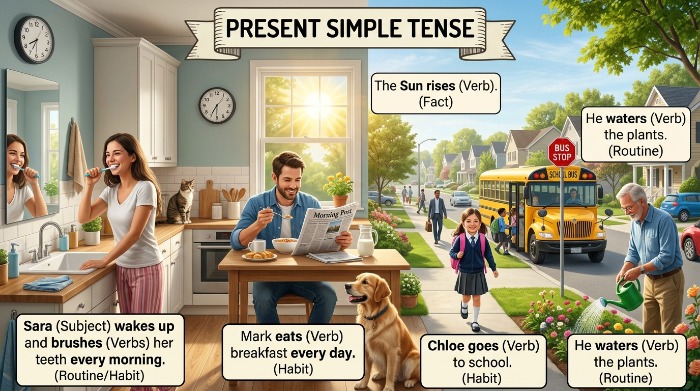
In the present simple, third-person singular subjects normally take a verb ending in -s; plural subjects use the base form.
يشرح هذا الدرس التوافق بين الفاعل والفعل مع القاعدة والاستعمالات الأساسية والفروق المهمة.
PatternsHe/She/It + verb-sI/You/We/They + base verb
Examples, uses & common mistakes
Key points
- Find the true grammatical subject.
- Ignore nearby nouns that are not the subject.
أمثلة
- The teacher works here.
يعمل المعلم هنا.
- The teachers work here.
يعمل المعلمون هنا.
Common mistake: Do not make the verb agree with the nearest noun if that noun is not the subject.
انتبه إلى ترتيب الكلمات واختيار صيغة الفعل؛ تجنّب نقل ترتيب لغتك الأولى حرفيًا.
AdvancedAdvanced
Ellipsis and substitution
الحذف والاستبدال
English often avoids repetition by omitting recoverable words or replacing them with forms such as one, do, so and neither.
يشرح هذا الدرس الحذف والاستبدال مع القاعدة والاستعمالات الأساسية والفروق المهمة.
PatternsI can swim and she can too.the red oneI think so.
Examples, uses & common mistakes
Key points
- Use ellipsis only when the missing meaning is clear.
- Use one/ones to substitute for countable nouns.
أمثلة
- I ordered the blue shirt, not the red one.
طلبت القميص الأزرق، لا الأحمر.
- She can drive, and I can too.
هي تستطيع القيادة، وأنا أيضًا.
Common mistake: Do not omit information if the result becomes ambiguous.
انتبه إلى ترتيب الكلمات واختيار صيغة الفعل؛ تجنّب نقل ترتيب لغتك الأولى حرفيًا.
ReportedIntermediate
Reported questions
الأسئلة المنقولة
Reported questions use statement word order and normally do not use do/does/did.
يشرح هذا الدرس الأسئلة المنقولة مع القاعدة والاستعمالات الأساسية والفروق المهمة.
Patternsasked + wh-word + subject + verbasked + if/whether + subject + verb
Examples, uses & common mistakes
Key points
- Use if/whether for yes-no questions.
- Keep statement word order after the question word.
أمثلة
- She asked where I lived.
سألت أين كنت أعيش.
- He asked if I was ready.
سأل إن كنت مستعدًا.
Common mistake: Do not keep direct-question inversion in a reported question.
انتبه إلى ترتيب الكلمات واختيار صيغة الفعل؛ تجنّب نقل ترتيب لغتك الأولى حرفيًا.
AdvancedAdvanced
The subjunctive in formal English
صيغة subjunctive في الإنجليزية الرسمية
After certain verbs and adjectives, especially in formal American English, a that-clause may use the base verb for all subjects.
يشرح هذا الدرس صيغة subjunctive في الإنجليزية الرسمية مع القاعدة والاستعمالات الأساسية والفروق المهمة.
Patternsrecommend that + subject + base verbit is essential that + subject + base verb
Examples, uses & common mistakes
Key points
- Use it after verbs such as recommend, insist and suggest in formal style.
- Recognize alternative should-structures in British English.
أمثلة
- They recommended that he apply early.
أوصوا بأن يقدم طلبه مبكرًا.
- It is essential that she be informed.
من الضروري إبلاغها.
Common mistake: Do not add third-person -s to the subjunctive base form.
انتبه إلى ترتيب الكلمات واختيار صيغة الفعل؛ تجنّب نقل ترتيب لغتك الأولى حرفيًا.
GerundAdvanced
Gerund vs infinitive: change of meaning
المصدر ing مقابل المصدر مع to وتغير المعنى
With some verbs, gerund and infinitive are both possible but the meaning changes, such as remember, stop and try.
يشرح هذا الدرس المصدر ing مقابل المصدر مع to وتغير المعنى مع القاعدة والاستعمالات الأساسية والفروق المهمة.
Patternsremember doing / remember to dostop doing / stop to dotry doing / try to do
Examples, uses & common mistakes
Key points
- Learn the meaning pair, not just the form.
- Use context to decide which complement is intended.
أمثلة
- I stopped smoking last year.
توقفت عن التدخين العام الماضي.
- I stopped to answer the phone.
توقفت لأجيب على الهاتف.
Common mistake: Do not assume gerund and infinitive are interchangeable after every verb.
انتبه إلى ترتيب الكلمات واختيار صيغة الفعل؛ تجنّب نقل ترتيب لغتك الأولى حرفيًا.
SentenceIntermediate
Fragments, run-ons and core punctuation
الجمل الناقصة والمتصلة وعلامات الترقيم
A complete sentence needs an independent clause. Two independent clauses need correct coordination or punctuation such as a period, semicolon, or comma plus coordinator.
يشرح هذا الدرس الجمل الناقصة والمتصلة وعلامات الترقيم مع القاعدة والاستعمالات الأساسية والفروق المهمة.
Patternsindependent clause. Independent clause.independent clause; independent clauseindependent clause, and/but/so independent clause
Examples, uses & common mistakes
Key points
- Recognize sentence fragments and comma splices.
- Use punctuation to show clause boundaries.
أمثلة
- The shop was closed, so we went home.
كان المتجر مغلقًا، لذلك عدنا إلى المنزل.
- The rain stopped; we continued walking.
توقف المطر؛ فواصلنا المشي.
Common mistake: Do not join two independent clauses with only a comma.
انتبه إلى شكل البنية وعلامات الترقيم المناسبة وتجنّب الترجمة الحرفية.
ReportedAdvanced
Reporting verbs and their patterns
أفعال نقل الكلام وأنماطها
Different reporting verbs take different complements: infinitive, gerund, object + infinitive, or that-clause.
يشرح هذا الدرس أفعال نقل الكلام وأنماطها مع القاعدة والاستعمالات الأساسية والفروق المهمة.
Patternsagree to dodeny doingadvise object to dosuggest that + clause / suggest doing
Examples, uses & common mistakes
Key points
- Learn the complement pattern together with each reporting verb.
- Use the pattern that matches the verb, not a single rule for all reporting verbs.
أمثلة
- She admitted taking the money.
اعترفت بأخذ المال.
- He advised me to wait.
نصحني أن أنتظر.
Common mistake: Do not use suggest + object + to-infinitive in standard English.
انتبه إلى شكل البنية وعلامات الترقيم المناسبة وتجنّب الترجمة الحرفية.
InversionIntermediate
Emphatic do and cleft sentences
do للتوكيد والجمل المشقوقة
English can emphasize a statement with do/does/did or focus information with it-clefts and what-clefts.
يشرح هذا الدرس do للتوكيد والجمل المشقوقة مع القاعدة والاستعمالات الأساسية والفروق المهمة.
PatternsI do agree.It was X that...What I need is...
Examples, uses & common mistakes
Key points
- Use emphatic do in affirmative statements for contrast or insistence.
- Use clefts to focus one element.
أمثلة
- I do understand your concern.
أنا أفهم قلقك فعلًا.
- What I need is a quiet room.
ما أحتاجه هو غرفة هادئة.
Common mistake: Do not use emphatic do together with another finite auxiliary.
انتبه إلى ترتيب الكلمات واختيار صيغة الفعل؛ تجنّب نقل ترتيب لغتك الأولى حرفيًا.
AgreementAdvanced
Agreement with there and relative clauses
التوافق مع there وفي الجمل الموصولة
In existential there structures, the verb commonly agrees with the following notional subject in formal standard English. In relative clauses, agreement depends on the antecedent represented by the relative pronoun.
يشرح هذا الدرس التوافق مع there وفي الجمل الموصولة مع القاعدة والاستعمالات الأساسية والفروق المهمة.
PatternsThere is + singularThere are + pluralone of the people who are...
Examples, uses & common mistakes
Key points
- Look beyond there to the following noun phrase.
- Find the antecedent of the relative pronoun.
أمثلة
- There are two messages for you.
هناك رسالتان لك.
- She is one of the people who work here.
هي واحدة من الأشخاص الذين يعملون هنا.
Common mistake: Do not make the relative-clause verb agree with an unrelated nearby noun.
انتبه إلى شكل البنية وعلامات الترقيم المناسبة وتجنّب الترجمة الحرفية.
ConditionalBeginner
Zero and first conditionals
الشرط الصفري والأول
The zero conditional describes general results; the first conditional describes a real future possibility.
يشرح هذا الدرس الشرط الصفري والأول مع القاعدة والاستعمالات الأساسية والفروق المهمة.
PatternsIf + present, presentIf + present, will + base verb
Examples, uses & common mistakes
Key points
- Use zero conditional for facts and routines.
- Use first conditional for realistic future possibilities.
أمثلة
- If you heat ice, it melts.
إذا سخنت الثلج فإنه يذوب.
- If it rains, we will stay home.
إذا أمطرت، سنبقى في المنزل.
Common mistake: Do not normally put will in the if-clause of a first conditional.
انتبه إلى ترتيب الكلمات واختيار صيغة الفعل؛ تجنّب نقل ترتيب لغتك الأولى حرفيًا.
RelativeAdvanced
Whose, where and when in relative clauses
whose و where و when في الجمل الموصولة
Whose expresses possession; where relates to places; when relates to times, though preposition + which is also possible in formal style.
يشرح هذا الدرس whose و where و when في الجمل الموصولة مع القاعدة والاستعمالات الأساسية والفروق المهمة.
Patternsperson whose + nounplace where + clausetime when + clause
Examples, uses & common mistakes
Key points
- Choose the connector by its function.
- Use whose for people and also for things when natural.
أمثلة
- I met a writer whose books I admire.
قابلت كاتبًا أعجب بكتبه.
- That is the house where I grew up.
ذلك هو المنزل الذي نشأت فيه.
Common mistake: Do not confuse whose with who’s.
انتبه إلى ترتيب الكلمات واختيار صيغة الفعل؛ تجنّب نقل ترتيب لغتك الأولى حرفيًا.
RelativeBeginner
Defining vs non-defining relative clauses
الجمل الموصولة المحددة وغير المحددة
Defining relatives identify which person or thing; non-defining relatives add extra information and are set off by commas.
يشرح هذا الدرس الجمل الموصولة المحددة وغير المحددة مع القاعدة والاستعمالات الأساسية والفروق المهمة.
Patternsnoun + defining relativenoun, non-defining relative,
Examples, uses & common mistakes
Key points
- Use commas around non-defining relatives.
- Do not normally use that in a non-defining relative clause.
أمثلة
- The students who studied passed.
الطلاب الذين درسوا نجحوا.
- My brother, who lives in Boston, is visiting.
أخي، الذي يعيش في بوسطن، يزورنا.
Common mistake: Punctuation changes whether the information is essential or additional.
انتبه إلى ترتيب الكلمات واختيار صيغة الفعل؛ تجنّب نقل ترتيب لغتك الأولى حرفيًا.
AdvancedAdvanced
Fronting and topic–comment structure
التقديم وبنية الموضوع والتعليق
Writers and speakers can move an element to the front to establish a topic, contrast or emphasis, especially in literary and conversational styles.
يشرح هذا الدرس التقديم وبنية الموضوع والتعليق مع القاعدة والاستعمالات الأساسية والفروق المهمة.
PatternsFronted adverbial + clauseObject/topic + clause/comment
Examples, uses & common mistakes
Key points
- Use fronting deliberately for information structure.
- Keep the grammatical relationships clear after moving an element.
أمثلة
- Into the room walked the manager.
دخل المدير إلى الغرفة.
- This book, I really enjoyed.
هذا الكتاب استمتعت به حقًا.
Common mistake: Do not front elements so heavily that the sentence becomes ambiguous or unnatural.
انتبه إلى شكل البنية وعلامات الترقيم المناسبة وتجنّب الترجمة الحرفية.
PassiveIntermediate
Passive across tenses
المبني للمجهول عبر الأزمنة
The passive keeps the tense in the auxiliary be while the main verb stays in the past participle form.
يشرح هذا الدرس المبني للمجهول عبر الأزمنة مع القاعدة والاستعمالات الأساسية والفروق المهمة.
Patternsis done / was done / has been done / will be done / is being done
Examples, uses & common mistakes
Key points
- Match the auxiliary to the intended tense.
- Keep the lexical verb in past participle form.
أمثلة
- The road is being repaired.
يتم إصلاح الطريق الآن.
- The report has been finished.
تم إنهاء التقرير.
Common mistake: Do not build the passive by changing only the main verb.
انتبه إلى ترتيب الكلمات واختيار صيغة الفعل؛ تجنّب نقل ترتيب لغتك الأولى حرفيًا.
ParticipleAdvanced
Reduced relative clauses
اختصار الجمل الموصولة
Some relative clauses can be reduced to participle phrases when the meaning remains clear.
يشرح هذا الدرس اختصار الجمل الموصولة مع القاعدة والاستعمالات الأساسية والفروق المهمة.
Patternspeople who live here → people living hereproducts that were made locally → products made locally
Examples, uses & common mistakes
Key points
- Reduce active relatives with -ing when appropriate.
- Reduce passive relatives with a past participle.
أمثلة
- The people waiting outside are students.
الأشخاص المنتظرون في الخارج طلاب.
- The books written by her are popular.
الكتب التي كتبتها شائعة.
Common mistake: Do not reduce a relative clause if the time or subject relationship becomes unclear.
انتبه إلى ترتيب الكلمات واختيار صيغة الفعل؛ تجنّب نقل ترتيب لغتك الأولى حرفيًا.
GerundBeginner
Gerunds as nouns
المصدر المنتهي بـ ing كاسم
A gerund is an -ing form functioning as a noun, for example as subject or object.
يشرح هذا الدرس المصدر المنتهي بـ ing كاسم مع القاعدة والاستعمالات الأساسية والفروق المهمة.
Patternsverb-ing as subject/objectpreposition + verb-ing
Examples, uses & common mistakes
Key points
- Use gerunds after prepositions.
- Gerunds can be subjects of sentences.
أمثلة
- Swimming is good exercise.
السباحة تمرين جيد.
- She is interested in learning Arabic.
هي مهتمة بتعلم العربية.
Common mistake: Do not use a bare infinitive after an ordinary preposition.
انتبه إلى ترتيب الكلمات واختيار صيغة الفعل؛ تجنّب نقل ترتيب لغتك الأولى حرفيًا.
SentenceIntermediate
Word order and adverb placement
ترتيب الكلمات وموضع الظروف
English relies strongly on word order. Frequency adverbs usually go before a lexical verb but after be.
يشرح هذا الدرس ترتيب الكلمات وموضع الظروف مع القاعدة والاستعمالات الأساسية والفروق المهمة.
PatternsSubject + adverb + lexical verbSubject + be + adverbVerb + object + manner/place/time
Examples, uses & common mistakes
Key points
- Keep the object close to the verb.
- Place frequency adverbs carefully.
أمثلة
- She usually takes the bus.
هي عادةً تستقل الحافلة.
- They finished the work quickly.
أنهوا العمل بسرعة.
Common mistake: Avoid separating a verb from its direct object with a long adverbial.
انتبه إلى ترتيب الكلمات واختيار صيغة الفعل؛ تجنّب نقل ترتيب لغتك الأولى حرفيًا.
HypotheticalBeginner
Wish for present and future situations
wish للحاضر والمستقبل
Wish + past form commonly expresses dissatisfaction with the present; wish + would can express a desired change in behavior or situation.
يشرح هذا الدرس wish للحاضر والمستقبل مع القاعدة والاستعمالات الأساسية والفروق المهمة.
Patternswish + past simplewish + would + base verb
Examples, uses & common mistakes
Key points
- Use a past form for an unreal present wish.
- Use would for a desired change, not usually for your own controllable action.
أمثلة
- I wish I knew the answer.
أتمنى لو كنت أعرف الإجابة.
- I wish the bus would come.
أتمنى لو تأتي الحافلة.
Common mistake: Do not interpret the past form after wish as past time automatically.
انتبه إلى ترتيب الكلمات واختيار صيغة الفعل؛ تجنّب نقل ترتيب لغتك الأولى حرفيًا.
ClauseIntermediate
Coordinating vs subordinating conjunctions
حروف العطف والتبعية
Coordinators link equal units; subordinators make one clause dependent on another.
يشرح هذا الدرس حروف العطف والتبعية مع القاعدة والاستعمالات الأساسية والفروق المهمة.
Patternsclause, and/but/so clausebecause/although/when + clause
Examples, uses & common mistakes
Key points
- Use a comma before a coordinator joining two full clauses.
- Choose the conjunction for the logical relationship.
أمثلة
- I called him, but he did not answer.
اتصلت به، لكنه لم يجب.
- We left early because traffic was heavy.
غادرنا مبكرًا لأن حركة المرور كانت كثيفة.
Common mistake: Do not use because and so together for the same cause-result link.
انتبه إلى ترتيب الكلمات واختيار صيغة الفعل؛ تجنّب نقل ترتيب لغتك الأولى حرفيًا.
ParticipleBeginner
Present and past participles
اسم الفاعل واسم المفعول الإنجليزيان
Present participles often describe an active or ongoing relation; past participles often describe a completed or passive relation.
يشرح هذا الدرس اسم الفاعل واسم المفعول الإنجليزيان مع القاعدة والاستعمالات الأساسية والفروق المهمة.
Patternsverb-ingpast participle (V3)
Examples, uses & common mistakes
Key points
- Distinguish bored from boring-type contrasts.
- Recognize participles in verb forms and adjective-like uses.
أمثلة
- The movie was boring.
كان الفيلم مملًا.
- We were bored.
كنا نشعر بالملل.
Common mistake: Do not confuse the -ed experiencer with the -ing cause in common adjective pairs.
انتبه إلى ترتيب الكلمات واختيار صيغة الفعل؛ تجنّب نقل ترتيب لغتك الأولى حرفيًا.
ParticipleAdvanced
Perfect participle clauses
الجمل المختصرة باسم الفاعل التام
Having + past participle shows that one action was completed before the action in the main clause. The passive form is having been + past participle.
يشرح هذا الدرس الجمل المختصرة باسم الفاعل التام مع القاعدة والاستعمالات الأساسية والفروق المهمة.
PatternsHaving + past participle, main clauseHaving been + past participle, main clause
Examples, uses & common mistakes
Key points
- Use it when the earlier-before-later relationship matters.
- Keep the understood subject the same as the main-clause subject.
أمثلة
- Having finished the report, she went home.
بعد أن أنهت التقرير، عادت إلى المنزل.
- Having been warned, they acted carefully.
بعد أن تم تحذيرهم، تصرفوا بحذر.
Common mistake: Avoid a perfect participle if its implied subject does not match the main clause.
انتبه إلى شكل البنية وعلامات الترقيم المناسبة وتجنّب الترجمة الحرفية.
GerundAdvanced
Verb complementation patterns
أنماط ما يأتي بعد الفعل
English verbs select different complement types: gerund, to-infinitive, bare infinitive, object + infinitive, or that-clause. These patterns must often be learned with the verb.
يشرح هذا الدرس أنماط ما يأتي بعد الفعل مع القاعدة والاستعمالات الأساسية والفروق المهمة.
Patternsavoid doingdecide to dolet someone dowant someone to doinsist that + clause
Examples, uses & common mistakes
Key points
- Record the pattern whenever you learn a new verb.
- Notice whether an object is required before the infinitive.
أمثلة
- They avoided discussing the problem.
تجنبوا مناقشة المشكلة.
- I want you to come early.
أريدك أن تأتي مبكرًا.
Common mistake: Do not assume two near-synonymous verbs take the same complement pattern.
انتبه إلى شكل البنية وعلامات الترقيم المناسبة وتجنّب الترجمة الحرفية.
AgreementAdvanced
Collective nouns and quantities
الأسماء الجماعية والكميات
Collective nouns and expressions of amount can take singular or plural agreement depending on meaning and variety of English.
يشرح هذا الدرس الأسماء الجماعية والكميات مع القاعدة والاستعمالات الأساسية والفروق المهمة.
PatternsA team is... / The team are...Ten dollars is...
Examples, uses & common mistakes
Key points
- Treat a measurement as one amount when appropriate.
- Be consistent with your variety of English for collective nouns.
أمثلة
- Ten dollars is enough.
عشرة دولارات تكفي.
- The committee has reached a decision.
توصلت اللجنة إلى قرار.
Common mistake: Do not assume every grammatically plural expression requires a plural verb.
انتبه إلى ترتيب الكلمات واختيار صيغة الفعل؛ تجنّب نقل ترتيب لغتك الأولى حرفيًا.
RelativeIntermediate
Relative pronouns and omission
ضمائر الوصل وحذفها
A relative pronoun can sometimes be omitted when it is the object of a defining relative clause, but not when it is the subject.
يشرح هذا الدرس ضمائر الوصل وحذفها مع القاعدة والاستعمالات الأساسية والفروق المهمة.
Patternsthe book (that) I boughtthe man who called
Examples, uses & common mistakes
Key points
- Identify whether the relative pronoun is subject or object.
- Omit object pronouns only where grammar allows.
أمثلة
- The book I bought is useful.
الكتاب الذي اشتريته مفيد.
- The woman who called left a message.
المرأة التي اتصلت تركت رسالة.
Common mistake: Do not omit the relative pronoun when it is the subject of the relative clause.
انتبه إلى ترتيب الكلمات واختيار صيغة الفعل؛ تجنّب نقل ترتيب لغتك الأولى حرفيًا.
RelativeAdvanced
Formal relatives with prepositions
الجمل الموصولة الرسمية مع حروف الجر
In formal style, a preposition may come before whom or which. In less formal English the preposition often stays at the end of the relative clause.
يشرح هذا الدرس الجمل الموصولة الرسمية مع حروف الجر مع القاعدة والاستعمالات الأساسية والفروق المهمة.
Patternsthe person to whom I spokethe company for which she works
Examples, uses & common mistakes
Key points
- Use whom after a fronted preposition for people in formal style.
- Use which after a fronted preposition for things.
أمثلة
- The person to whom I spoke was helpful.
كان الشخص الذي تحدثت إليه متعاونًا.
- This is the company for which she works.
هذه هي الشركة التي تعمل لديها.
Common mistake: Do not use that immediately after a fronted preposition.
انتبه إلى شكل البنية وعلامات الترقيم المناسبة وتجنّب الترجمة الحرفية.
HypotheticalIntermediate
Wish and if only for past regrets
wish و if only للندم على الماضي
Wish/if only + past perfect expresses regret about a past event that cannot be changed.
يشرح هذا الدرس wish و if only للندم على الماضي مع القاعدة والاستعمالات الأساسية والفروق المهمة.
Patternswish/if only + had + past participle
Examples, uses & common mistakes
Key points
- Express past regrets and imagined alternatives.
- Use past perfect to move one step back from the past.
أمثلة
- I wish I had studied harder.
ليتني درست بجد أكثر.
- If only we had left earlier.
ليتنا غادرنا أبكر.
Common mistake: Do not use simple past when the intended meaning is an unreal past regret.
انتبه إلى ترتيب الكلمات واختيار صيغة الفعل؛ تجنّب نقل ترتيب لغتك الأولى حرفيًا.
HypotheticalAdvanced
Would rather and it’s time
would rather و it’s time
Would rather can express preference; with a different subject it often takes a past form. It’s time can also take a past form for desired action now.
يشرح هذا الدرس would rather و it’s time مع القاعدة والاستعمالات الأساسية والفروق المهمة.
Patternswould rather + base verbwould rather + subject + pastit is time + subject + past
Examples, uses & common mistakes
Key points
- Express preferences directly.
- Use the past form for unreal or desired present behavior after these expressions.
أمثلة
- I would rather stay home.
أفضل أن أبقى في المنزل.
- It is time we went home.
حان الوقت لنعود إلى المنزل.
Common mistake: The past form here may refer to present or future preference, not past time.
انتبه إلى ترتيب الكلمات واختيار صيغة الفعل؛ تجنّب نقل ترتيب لغتك الأولى حرفيًا.
ConditionalIntermediate
Second conditional
الشرط الثاني
The second conditional expresses unreal, imaginary or unlikely present and future situations.
يشرح هذا الدرس الشرط الثاني مع القاعدة والاستعمالات الأساسية والفروق المهمة.
PatternsIf + past simple, would + base verb
Examples, uses & common mistakes
Key points
- Talk about imaginary situations.
- Give advice with If I were you.
أمثلة
- If I had more time, I would travel more.
لو كان لدي وقت أكثر، لسافرت أكثر.
- If I were you, I would wait.
لو كنت مكانك، لانتظرت.
Common mistake: Do not normally use would in the if-clause.
انتبه إلى ترتيب الكلمات واختيار صيغة الفعل؛ تجنّب نقل ترتيب لغتك الأولى حرفيًا.
ClauseBeginner
Independent and dependent clauses
الجمل المستقلة والتابعة
An independent clause can stand alone; a dependent clause needs another clause to complete the meaning.
يشرح هذا الدرس الجمل المستقلة والتابعة مع القاعدة والاستعمالات الأساسية والفروق المهمة.
PatternsIndependent clauseSubordinator + dependent clause
Examples, uses & common mistakes
Key points
- Recognize subordinators such as because, although, if and when.
- Join clauses without creating fragments.
أمثلة
- I stayed home because it was raining.
بقيت في المنزل لأن الجو كان ممطرًا.
- Although she was tired, she continued working.
مع أنها كانت متعبة، واصلت العمل.
Common mistake: A dependent clause by itself is usually a sentence fragment.
انتبه إلى ترتيب الكلمات واختيار صيغة الفعل؛ تجنّب نقل ترتيب لغتك الأولى حرفيًا.
SentenceIntermediate
Objects and complements
المفاعيل والمكملات
Objects receive the action, while complements describe or identify the subject or object.
يشرح هذا الدرس المفاعيل والمكملات مع القاعدة والاستعمالات الأساسية والفروق المهمة.
PatternsS + V + OS + linking V + subject complementS + V + O + object complement
Examples, uses & common mistakes
Key points
- Distinguish action verbs from linking verbs.
- Check whether the final phrase renames or describes something.
أمثلة
- They elected Sara president.
انتخبوا سارة رئيسة.
- The soup smells wonderful.
رائحة الحساء رائعة.
Common mistake: Do not treat every noun after a verb as a direct object.
انتبه إلى ترتيب الكلمات واختيار صيغة الفعل؛ تجنّب نقل ترتيب لغتك الأولى حرفيًا.
ReportedBeginner
Reported statements
نقل الأقوال
Reported speech retells what someone said, often with tense backshift when the reporting verb is in the past.
يشرح هذا الدرس نقل الأقوال مع القاعدة والاستعمالات الأساسية والفروق المهمة.
Patternssaid (that) + clausetold + object + clause
Examples, uses & common mistakes
Key points
- Backshift tense when the context calls for it.
- Use tell with an object.
أمثلة
- She said that she was tired.
قالت إنها كانت متعبة.
- He told me that he needed help.
أخبرني أنه يحتاج إلى المساعدة.
Common mistake: Do not say told that without specifying who was told.
انتبه إلى ترتيب الكلمات واختيار صيغة الفعل؛ تجنّب نقل ترتيب لغتك الأولى حرفيًا.
PassiveAdvanced
Reporting passives: It is said / He is believed
المبني للمجهول مع أفعال القول والاعتقاد
Formal English often reports general beliefs or claims with impersonal passive structures or subject + passive reporting verb + infinitive.
يشرح هذا الدرس المبني للمجهول مع أفعال القول والاعتقاد مع القاعدة والاستعمالات الأساسية والفروق المهمة.
PatternsIt is said that + clauseSubject + is said/believed/thought + to-infinitive
Examples, uses & common mistakes
Key points
- Use these forms when the source is general or unimportant.
- Choose a perfect infinitive for an earlier event when needed.
أمثلة
- It is believed that the painting is authentic.
يُعتقد أن اللوحة أصلية.
- He is said to live in Canada.
يقال إنه يعيش في كندا.
Common mistake: Do not mix the active and passive reporting patterns in one structure.
انتبه إلى شكل البنية وعلامات الترقيم المناسبة وتجنّب الترجمة الحرفية.
InversionAdvanced
Conditional inversion
القلب في الجمل الشرطية
Formal conditionals can omit if and invert had, were or should with the subject.
يشرح هذا الدرس القلب في الجمل الشرطية مع القاعدة والاستعمالات الأساسية والفروق المهمة.
PatternsHad I known, ...Were I you, ...Should you need help, ...
Examples, uses & common mistakes
Key points
- Use this mainly in formal style.
- Keep the meaning equivalent to an if-clause.
أمثلة
- Had I known, I would have called.
لو كنت أعلم، لاتصلت.
- Should you need help, call me.
إن احتجت إلى مساعدة، فاتصل بي.
Common mistake: Do not invert any past verb; the pattern is limited to had, were and should structures.
انتبه إلى ترتيب الكلمات واختيار صيغة الفعل؛ تجنّب نقل ترتيب لغتك الأولى حرفيًا.
AdvancedIntermediate
Parallel structure
التوازي في التركيب
Items joined in a list or comparison should normally have matching grammatical form.
يشرح هذا الدرس التوازي في التركيب مع القاعدة والاستعمالات الأساسية والفروق المهمة.
Patternsto read, to write, and to speakreading, writing, and speaking
Examples, uses & common mistakes
Key points
- Keep coordinated items in the same grammatical pattern.
- Use parallel structure in lists and paired constructions.
أمثلة
- She likes reading, writing, and painting.
تحب القراءة والكتابة والرسم.
- The job requires patience, accuracy, and speed.
تتطلب الوظيفة الصبر والدقة والسرعة.
Common mistake: Avoid mixing an infinitive, gerund and full clause in one coordinated list without reason.
انتبه إلى ترتيب الكلمات واختيار صيغة الفعل؛ تجنّب نقل ترتيب لغتك الأولى حرفيًا.
InversionAdvanced
So and such for fronted emphasis
so و such للتوكيد المتقدم
In formal literary style, so + adjective or such + be can be fronted and followed by inversion for strong emphasis.
يشرح هذا الدرس so و such للتوكيد المتقدم مع القاعدة والاستعمالات الأساسية والفروق المهمة.
PatternsSo + adjective + auxiliary + subject + that...Such + be + noun phrase + that...
Examples, uses & common mistakes
Key points
- Recognize this mainly in formal or literary writing.
- Do not confuse it with ordinary so/such result clauses.
أمثلة
- So difficult was the test that many students left early.
كان الاختبار صعبًا جدًا لدرجة أن كثيرًا من الطلاب غادروا مبكرًا.
- Such was the noise that we could not sleep.
كان الضجيج شديدًا لدرجة أننا لم نستطع النوم.
Common mistake: Do not apply inversion after every occurrence of so or such.
انتبه إلى شكل البنية وعلامات الترقيم المناسبة وتجنّب الترجمة الحرفية.
ConditionalIntermediate
Unless, provided that and as long as
unless و provided that و as long as
Conditional meaning can be expressed with alternatives to if. Unless means if not; provided that and as long as express a necessary condition.
يشرح هذا الدرس unless و provided that و as long as مع القاعدة والاستعمالات الأساسية والفروق المهمة.
Patternsunless + affirmative clauseprovided/providing that + clauseas long as + clause
Examples, uses & common mistakes
Key points
- Use unless instead of if...not when the meaning is truly negative.
- Use provided/as long as for conditions that must be satisfied.
أمثلة
- I will go unless it rains.
سأذهب ما لم تمطر.
- You can borrow it as long as you return it tomorrow.
يمكنك استعارتها بشرط أن تعيدها غدًا.
Common mistake: Avoid double negatives such as unless you do not... when you mean if you do not.
انتبه إلى شكل البنية وعلامات الترقيم المناسبة وتجنّب الترجمة الحرفية.
AgreementIntermediate
Tricky agreement: each, every, either, neither
التوافق الصعب: each و every و either و neither
Words such as each, every, either and neither are normally singular when they are the grammatical head of the subject.
يشرح هذا الدرس التوافق الصعب: each و every و either و neither مع القاعدة والاستعمالات الأساسية والفروق المهمة.
PatternsEach/Every + singular noun + singular verbEither/Neither + singular verb
Examples, uses & common mistakes
Key points
- Check the head word of the subject phrase.
- Use singular agreement with each/every in standard usage.
أمثلة
- Each of the students has a locker.
لكل طالب خزانة.
- Neither answer is correct.
لا إجابة من الاثنتين صحيحة.
Common mistake: Do not let a plural noun inside an of-phrase control the verb.
انتبه إلى ترتيب الكلمات واختيار صيغة الفعل؛ تجنّب نقل ترتيب لغتك الأولى حرفيًا.
InversionAdvanced
Inversion after negative adverbials
القلب بعد الظروف السلبية
Formal emphasis can place a negative or restrictive adverbial first and invert the auxiliary and subject.
يشرح هذا الدرس القلب بعد الظروف السلبية مع القاعدة والاستعمالات الأساسية والفروق المهمة.
PatternsNever have I...Rarely do they...Not only did she...
Examples, uses & common mistakes
Key points
- Use an auxiliary before the subject after fronted negative adverbials.
- Use do-support when no auxiliary is otherwise present.
أمثلة
- Never have I seen such a view.
لم أرَ منظرًا كهذا قط.
- Rarely do they arrive late.
نادرًا ما يصلون متأخرين.
Common mistake: Do not invert ordinary sentences unless the trigger requires it.
انتبه إلى ترتيب الكلمات واختيار صيغة الفعل؛ تجنّب نقل ترتيب لغتك الأولى حرفيًا.
HypotheticalAdvanced
As if and as though
as if و as though
As if/as though can introduce comparisons that are real or unreal. A past form can signal an unreal present comparison, and past perfect can signal an unreal past comparison.
يشرح هذا الدرس as if و as though مع القاعدة والاستعمالات الأساسية والفروق المهمة.
Patternsas if/as though + presentas if/as though + pastas if/as though + past perfect
Examples, uses & common mistakes
Key points
- Choose tense according to reality and time.
- Use unreal past forms when the comparison is not true.
أمثلة
- He talks as if he knew everything.
يتحدث كما لو كان يعرف كل شيء.
- She looked as though she had seen a ghost.
بدت كما لو أنها رأت شبحًا.
Common mistake: Do not treat the past form after as if as automatically referring to past time.
انتبه إلى شكل البنية وعلامات الترقيم المناسبة وتجنّب الترجمة الحرفية.
SentenceBeginner
Basic sentence elements
عناصر الجملة الأساسية
English clauses are built around a subject and a verb, with optional objects, complements and adverbials.
يشرح هذا الدرس عناصر الجملة الأساسية مع القاعدة والاستعمالات الأساسية والفروق المهمة.
PatternsSubject + VerbSubject + Verb + ObjectSubject + Linking Verb + Complement
Examples, uses & common mistakes
Key points
- Identify the subject and main verb first.
- Add objects or complements only when the verb requires them.
أمثلة
- The child laughed.
ضحك الطفل.
- Maya opened the window.
فتحت مايا النافذة.
Common mistake: Do not omit the subject in ordinary English statements.
انتبه إلى ترتيب الكلمات واختيار صيغة الفعل؛ تجنّب نقل ترتيب لغتك الأولى حرفيًا.
ClauseAdvanced
Noun clauses and adverb clauses
الجمل الاسمية والظرفية
A noun clause functions like a noun; an adverb clause adds information about time, reason, condition, contrast or purpose.
يشرح هذا الدرس الجمل الاسمية والظرفية مع القاعدة والاستعمالات الأساسية والفروق المهمة.
PatternsI know + that-clausewhat/why/how + clausesubordinator + adverb clause
Examples, uses & common mistakes
Key points
- Use statement word order inside most noun clauses.
- Use adverb clauses to show logical relationships.
أمثلة
- I know that she is ready.
أعرف أنها مستعدة.
- Call me when you arrive.
اتصل بي عندما تصل.
Common mistake: Do not use question word order inside an embedded noun clause.
انتبه إلى ترتيب الكلمات واختيار صيغة الفعل؛ تجنّب نقل ترتيب لغتك الأولى حرفيًا.
ClauseAdvanced
Purpose, result and concession clauses
جمل الغرض والنتيجة والتنازل
Complex sentences can express purpose, result and concession with structures such as so that, so/such...that, although and even though.
يشرح هذا الدرس جمل الغرض والنتيجة والتنازل مع القاعدة والاستعمالات الأساسية والفروق المهمة.
Patternsso that + clauseso + adjective + thatsuch + noun phrase + thatalthough/even though + clause
Examples, uses & common mistakes
Key points
- Choose the connector that matches the logical relation.
- Distinguish purpose from result.
أمثلة
- She whispered so that nobody could hear.
همست كي لا يسمع أحد.
- It was so cold that the lake froze.
كان الجو باردًا جدًا حتى تجمدت البحيرة.
Common mistake: Do not use although and but together in the same contrast structure.
انتبه إلى شكل البنية وعلامات الترقيم المناسبة وتجنّب الترجمة الحرفية.
PassiveBeginner
Passive voice basics
أساسيات المبني للمجهول
The passive focuses on the receiver of an action. It is formed with be plus a past participle.
يشرح هذا الدرس أساسيات المبني للمجهول مع القاعدة والاستعمالات الأساسية والفروق المهمة.
Patternsbe + past participleObject of active sentence → subject of passive
Examples, uses & common mistakes
Key points
- Use the passive when the doer is unknown, obvious or less important.
- Add by + agent only when the agent matters.
أمثلة
- The door was opened at nine.
فُتح الباب عند التاسعة.
- English is spoken in many countries.
تُتحدث الإنجليزية في بلدان كثيرة.
Common mistake: Do not forget to change the form of be for tense and agreement.
انتبه إلى ترتيب الكلمات واختيار صيغة الفعل؛ تجنّب نقل ترتيب لغتك الأولى حرفيًا.
PassiveAdvanced
Causative have and get
السببية باستعمال have و get
Have/get + object + past participle means that someone arranges for another person to perform a service or action.
يشرح هذا الدرس السببية باستعمال have و get مع القاعدة والاستعمالات الأساسية والفروق المهمة.
Patternshave + object + past participleget + object + past participle
Examples, uses & common mistakes
Key points
- Use it for services and arranged actions.
- Get is often less formal than have.
أمثلة
- I had my car repaired yesterday.
أصلحت سيارتي لدى شخص أمس.
- She got her phone fixed.
جعلت شخصًا يصلح هاتفها.
Common mistake: Do not confuse I cut my hair with I had my hair cut.
انتبه إلى ترتيب الكلمات واختيار صيغة الفعل؛ تجنّب نقل ترتيب لغتك الأولى حرفيًا.
ParticipleIntermediate
Participle clauses
الجمل المختصرة باسم الفاعل أو المفعول
Participle clauses compress information when the understood subject is the same as the subject of the main clause.
يشرح هذا الدرس الجمل المختصرة باسم الفاعل أو المفعول مع القاعدة والاستعمالات الأساسية والفروق المهمة.
PatternsWalking home, ...Built in 1900, ...Having finished, ...
Examples, uses & common mistakes
Key points
- Use them to express time, reason or accompanying action.
- Make sure the understood subject is clear.
أمثلة
- Walking home, I saw an old friend.
وأنا أمشي إلى المنزل، رأيت صديقًا قديمًا.
- Built in 1900, the house needs repairs.
بُني المنزل عام 1900 وهو يحتاج إلى إصلاحات.
Common mistake: Avoid dangling participles whose implied subject does not match the main clause.
انتبه إلى ترتيب الكلمات واختيار صيغة الفعل؛ تجنّب نقل ترتيب لغتك الأولى حرفيًا.
GerundIntermediate
To-infinitives and bare infinitives
المصدر مع to والمصدر المجرد
Some verbs take to + infinitive, while modal verbs and certain structures take a bare infinitive.
يشرح هذا الدرس المصدر مع to والمصدر المجرد مع القاعدة والاستعمالات الأساسية والفروق المهمة.
Patternswant to gocan golet/make + object + base verb
Examples, uses & common mistakes
Key points
- Learn verb complementation patterns.
- Use bare infinitive after modal auxiliaries.
أمثلة
- I want to leave early.
أريد أن أغادر مبكرًا.
- They made us wait.
جعلونا ننتظر.
Common mistake: Do not add to after a modal verb.
انتبه إلى ترتيب الكلمات واختيار صيغة الفعل؛ تجنّب نقل ترتيب لغتك الأولى حرفيًا.
ReportedAdvanced
Reported commands and time/place shifts
الأوامر المنقولة وتحويلات الزمان والمكان
Commands are commonly reported with tell/ask + object + infinitive; time and place words may change according to viewpoint.
يشرح هذا الدرس الأوامر المنقولة وتحويلات الزمان والمكان مع القاعدة والاستعمالات الأساسية والفروق المهمة.
Patternstold/asked + object + to-infinitivenow → then; today → that day; here → there
Examples, uses & common mistakes
Key points
- Use a negative infinitive for negative commands.
- Shift time/place references only when the viewpoint changes.
أمثلة
- The doctor told me to rest.
طلب مني الطبيب أن أرتاح.
- She asked us not to be late.
طلبت منا ألا نتأخر.
Common mistake: Do not backshift mechanically when the original information is still current.
انتبه إلى ترتيب الكلمات واختيار صيغة الفعل؛ تجنّب نقل ترتيب لغتك الأولى حرفيًا.
ConditionalAdvanced
Third and mixed conditionals
الشرط الثالث والمختلط
Third conditionals imagine a different past; mixed conditionals connect an unreal past with a present result or vice versa.
يشرح هذا الدرس الشرط الثالث والمختلط مع القاعدة والاستعمالات الأساسية والفروق المهمة.
PatternsIf + past perfect, would have + past participleIf + past perfect, would + base verb
Examples, uses & common mistakes
Key points
- Express past regret or imagined past results.
- Connect past causes with present consequences in mixed conditionals.
أمثلة
- If we had left earlier, we would have caught the train.
لو غادرنا أبكر، للحِقنا بالقطار.
- If I had studied medicine, I would be a doctor now.
لو درست الطب، لكنت طبيبًا الآن.
Common mistake: Keep the time reference consistent with the meaning you want.
انتبه إلى ترتيب الكلمات واختيار صيغة الفعل؛ تجنّب نقل ترتيب لغتك الأولى حرفيًا.