

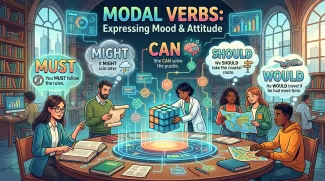

This article provides a comprehensive, all-in-one guide to English modal verbs

This article provides a comprehensive, all-in-one guide to the verb

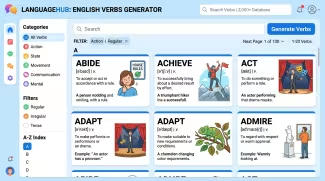
Master the 2,000 most common English verbs with this smart and interactive learning tool.

The English language is composed of various elements that work together to form meaningful sentences. These elements are known as the parts of speech.

Future Perfect

This lesson explains the future perfect in clear, practical English.

Use it for actions that will be completed before a future time or future action.

The main form is: Subject + will have + past participle.

Common time words include by Friday, by tomorrow, before you arrive, by the end of the day, by next month.

You will study affirmative sentences, negative sentences, questions, common mistakes, and useful examples.

Meet the Pronouns: Who is Who? (I, You, He, She)

Welcome to your beginner grammar lesson! Today, we are going to learn about Personal Pronouns.

What is a Pronoun?

A pronoun is a short word we use instead of a name or a noun. It helps us speak smoothly without repeating the same words over and over. For example, instead of saying, "David is happy. David is reading," we say, "David is happy. He is reading."

The Big Four: I, You, He, She

Here are the most common singular pronouns you need to know:

Past Continuous


This lesson explains the past continuous in clear, practical English.

Use it for actions in progress at a past time, background actions, and interrupted past actions.

The main form is: Subject + was or were + verb-ing.

Common time words include at 7 p.m. yesterday, when I called, while, during the meeting, all morning, at that moment.

You will study affirmative sentences, negative sentences, questions, common mistakes, and useful examples.

Adverbs of Time and Place

Beginner to Elementary Grammar A1

In this article, Beginner to Elementary Grammar A1 learners study adverbs of time and place.

You will learn how adverbs show when and where something happens.

The key question is: Does the extra information tell time, place, or both?

The main rule to remember is: Place the adverb where it clearly connects to the word or idea it modifies.

The Ultimate Beginner's Guide to English Grammar: Alphabet, Punctuation & Sentence Basics

Mastering the foundational elements of the English language is the first step toward clear and effective communication. This comprehensive guide covers the complete English alphabet from A–Z, ensuring you understand the critical differences between capital and lowercase letters. We explore basic punctuation marks—periods, question marks, and exclamation points—to help you express the right tone and intent.

This article provides a comprehensive, all-in-one guide to English inversion — one of the most sophisticated and elegant structures in the language.

This article provides a comprehensive, all-in-one guide to English inversion — one of the most sophisticated and elegant structures in the language.

This article provides a comprehensive, all-in-one guide to English inversion — one of the most sophisticated and elegant structures in the language.

This article provides a comprehensive, all-in-one guide to English inversion — one of the most sophisticated and elegant structures in the language.

This article provides a comprehensive, all-in-one guide to the passive voice in English, designed for intermediate learners at levels B1 to B2 who want to understand when

This article provides a comprehensive, all-in-one guide to the passive voice in English, designed for intermediate learners at levels B1 to B2 who want to understand when